

Most people overestimate what they can change in a single week and drastically underestimate what they can change in a year. This mismatch explains why so many ambitious New Year’s resolutions collapse by February, and why the people who make the most lasting transformations in their lives often did it through changes so small they barely felt like effort at the time. A single push-up a day. Ten minutes of reading before bed. Drinking one extra glass of water. None of these sound impressive in isolation, but compounded over months, they reshape a life.
The gap between how we imagine change happening and how it actually happens is one of the biggest obstacles to building lasting habits. We picture dramatic transformation: a total overhaul of diet, exercise, sleep, and productivity, all starting Monday morning. What usually happens instead is that the ambition is unsustainable, motivation fades by day four, and we’re left feeling like a failure rather than recognizing that the plan itself was the problem.
Start Absurdly Small
The habits that actually stick are almost always smaller than they feel like they should be. If your goal is to start exercising regularly, committing to “one push-up” rather than “a thirty-minute workout” feels almost silly, but it works precisely because it’s so easy that skipping it feels more effortful than doing it. Once the habit of showing up is established, the natural tendency is to do more than the minimum on most days anyway.
The psychological principle at play here is that consistency matters far more than intensity in the early stages of habit formation. A habit performed imperfectly every day for a month builds a stronger neural pathway than a habit performed intensely for a week and then abandoned. Your brain learns through repetition, not through occasional bursts of extreme effort.
Attach New Habits to Existing Ones
One of the most reliable habit-building techniques is called habit stacking: attaching a new, small behavior to an established routine you already do automatically. If you already make coffee every morning, you might decide that while the coffee brews, you’ll do two minutes of stretching. If you already brush your teeth every night, you might decide that immediately afterward, you’ll write down one thing you’re grateful for.
This technique works because it removes the need to remember or decide to do the new habit. The existing routine becomes the trigger, and over time, the new behavior gets woven into the fabric of something you’re already doing without thinking about it.
Make the Habit Visible
Environment shapes behavior more powerfully than most people realize. If your goal is to read more, leaving a book on your pillow means you’ll see it every night before bed, making the choice to read at least somewhat more likely than if the book is buried on a shelf in another room. If you want to drink more water, keeping a filled water bottle on your desk removes the friction of having to get up and fill a glass.
Conversely, habits you’re trying to reduce become easier to avoid when you add friction. If you’re trying to spend less time on your phone before bed, charging it in the kitchen rather than on your nightstand makes the undesired behavior slightly harder to access, which is often enough to break the automatic pattern.
Track Progress Without Becoming Obsessive
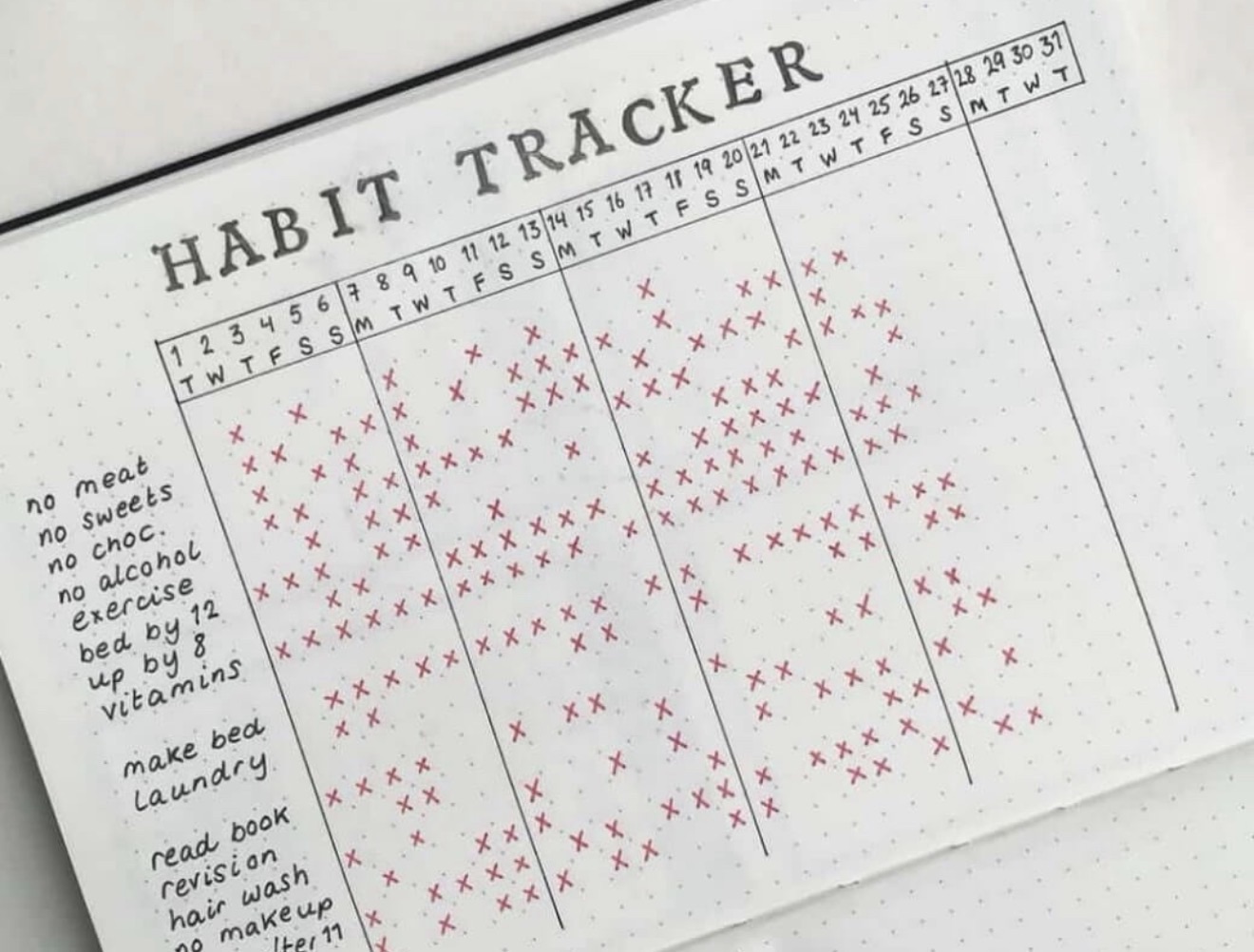
There’s real value in tracking habits, even something as simple as marking an X on a calendar for every day you complete a small routine. Seeing a visual chain of consistency creates a mild but real motivation not to break the streak. That said, tracking can tip into obsession for some people, turning a supportive tool into another source of anxiety and self-judgment.
If you miss a day, the research on habit formation is fairly clear: one missed day has almost no effect on long-term habit strength, but the story you tell yourself about that missed day matters enormously. Treating a skipped day as evidence that you’ve failed and might as well give up is far more damaging than the missed day itself. The people who successfully build lasting habits are rarely the ones who never slip up; they’re the ones who return to the habit quickly after a lapse without turning it into a narrative of failure.
Identity Matters More Than Outcomes
One of the most powerful shifts in how people approach habit change is moving away from outcome-based goals — lose ten pounds, save five thousand dollars — toward identity-based habits. Instead of focusing purely on the result, you focus on becoming the type of person who does this behavior consistently. “I’m someone who moves my body every day” is a different internal story than “I need to lose weight,” and it tends to produce more durable behavior change because it’s tied to self-concept rather than a temporary goal that, once achieved, removes the motivation to continue.
Each time you complete a small habit, you’re casting a vote for the type of person you want to become. A single vote doesn’t define you, but a consistent pattern of votes, cast day after day, eventually does.
Patience Is the Real Skill
Perhaps the hardest part of building small habits is the early period where almost nothing seems to be happening. A week of stretching for two minutes a day doesn’t produce visible results. A month of reading ten pages a night doesn’t feel like it’s meaningfully increasing your knowledge. This flat, uneventful middle stretch is exactly where most people give up, right before the compounding effects would have started to become noticeable.
Trusting the process during this invisible phase, without needing constant proof that it’s working, is genuinely difficult, but it’s also the entire game. Small habits rebuild lives not through any single dramatic moment, but through the quiet, unglamorous accumulation of thousands of small choices that, individually, look like almost nothing at all.