
There’s a moment that happens to almost everyone who tries minimalism, even in a small way: you clear out a closet, a drawer, a shelf, and instead of feeling loss, you feel lighter. Not because the objects themselves were burdensome, but because the mental weight of managing, storing, and thinking about them quietly disappears along with them. This feeling — the unexpected relief of owning less — is at the heart of why minimalism has resonated with so many people over the past decade, even as consumer culture pushes in the opposite direction.
Minimalism gets a bad reputation sometimes, conjured up as bare white rooms with a single chair and nothing on the walls. But the actual practice, for most people, has very little to do with aesthetics and everything to do with intentionality. It’s less about how few things you own and more about whether the things you do own genuinely serve your life.
Why We Accumulate So Much
Modern life is engineered to make acquisition easy and accumulation nearly invisible. A single click and a package arrives at your door within a day or two. Sales, discounts, and algorithmically targeted ads make almost everything feel like a good deal at the moment of purchase. Over months and years, this steady trickle of small purchases adds up to closets stuffed with clothes we don’t wear, drawers full of gadgets we forgot we owned, and garages that can no longer fit a car.
None of this happens because people are careless or wasteful by nature. It happens because our environment nudges us toward acquisition at every turn, and very few systems in modern life nudge us toward letting go. Minimalism, at its core, is simply building intentional counter-pressure against that constant pull.
The Real Cost of Clutter
It’s easy to underestimate how much mental energy clutter consumes. Every object in your home is something your brain registers, even subconsciously, when you walk past it. A pile of unsorted papers on the kitchen counter isn’t just an eyesore; it’s a small, persistent reminder of an unfinished task. A closet stuffed with clothes you don’t wear makes getting dressed each morning slightly more effortful, because there’s more visual noise to sift through.
Researchers who study environmental psychology have found that cluttered spaces are associated with higher levels of stress hormones and can measurably reduce our ability to focus. This doesn’t mean a single messy room will ruin your life, but it does suggest that the spaces we live in have a quiet, cumulative effect on how calm and clear-headed we feel.
Starting Small, Not All at Once
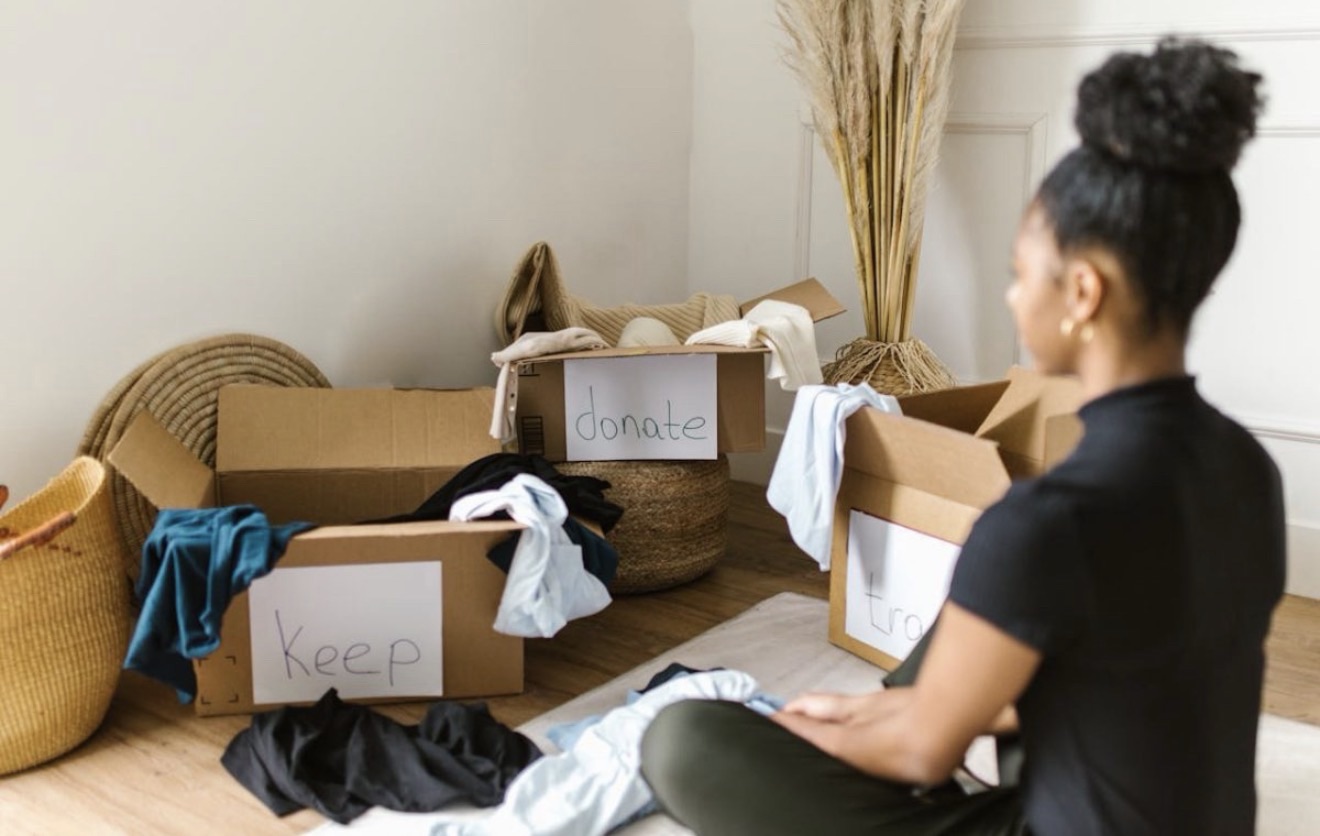
The mistake many people make when they first try to declutter is attempting to tackle their entire home in a single weekend. This almost always leads to a giant, exhausting pile of stuff in the middle of the living room and a burnout that makes the whole project feel miserable. A more sustainable approach is to pick one small, contained area — a single drawer, one shelf, the top of your desk — and finish it completely before moving to the next.
This small-scope approach does two things. First, it gives you a genuine sense of accomplishment relatively quickly, which builds momentum. Second, it lets you practice the actual decision-making skill of minimalism: asking yourself honestly whether something adds value to your life, without getting so overwhelmed that you start making sweeping, regretful decisions just to be done with the process.
The Questions That Actually Help
Rather than asking “does this spark joy,” which can feel abstract or difficult to apply to practical items like a spare phone charger, it can help to ask more concrete questions. Have I used this in the last year? Would I buy this again today if I saw it in a store? Does keeping this item cost me more in storage, cleaning, or mental clutter than the value it provides?
For sentimental items, the calculus is different, and that’s fine. Minimalism isn’t about ruthlessly discarding anything with emotional weight. It’s entirely reasonable to keep a box of letters or a childhood item that carries real meaning, even if it serves no practical function. The goal isn’t to own nothing; it’s to own things on purpose.
Minimalism and Money
One underappreciated benefit of owning less is the effect it has on spending habits. Once you experience the relief of a decluttered space, you naturally become more hesitant to fill it back up with impulse purchases. Many people who adopt minimalist habits find that their spending drops significantly, not because they’re depriving themselves, but because they’ve become more discerning about what they actually want versus what advertising has convinced them they need.
This shift can free up real financial resources for things that matter more — travel, experiences, savings, or simply the peace of mind that comes from not living paycheck to paycheck because of accumulated debt from things gathering dust in a closet.
It’s Not a Competition
Perhaps the most important thing to understand about minimalism is that there’s no universal standard to meet. Some people feel most at peace owning fewer than a hundred possessions; others feel completely comfortable with a fuller, more eclectic home as long as everything in it is chosen with intention. The number of things you own matters far less than your relationship to those things.
The goal isn’t to impress anyone with how little you own, or to follow a rigid set of rules borrowed from a book or a YouTube video. It’s to create a living space, and by extension a life, that feels lighter, calmer, and more genuinely yours. Once you experience even a small taste of that freedom, it becomes much harder to go back to accumulating without thought.